





Chevrolet’s reliable Express cargo vans have been on the market for over two decades and remain popular. The main reason for this is that they get the job done, whether hauling a heavy payload or transporting a group of passengers. For 2022, Chevy’s Express vans are back with the features you’ll need to get to work. We can provide expert advice on which van to buy for your business requirements, so don’t hesitate to contact us at Dan Cummins Chevrolet. Chevy Express Engine Options The Express has three engine options, all of which pack a substantial punch. The base engine is a 4.3L V-6 that churns out 276 horsepower and 298 lb-ft of torque. If you frequently haul heavy loads and would prefer a bit more power, you can step up to the 6.6L V-8 with 401 horsepower and 464 lb-ft of torque. The final engine option is a 2.8L diesel with 181 horsepower and 369 lb-ft of torque. The diesel engine will be the most fuel-efficient option of the three. Express Towing and Hauling If you’re regularly transporting goods to your store or customers, you’ll be happy to learn that the Express offers solid towing and payload limits. This van can tow up to 10,000 pounds, which is enough to cope with a decent-sized trailer. In the back, it can haul a maximum payload of 4,280 pounds. Express Exterior Dimensions Whether you opt for an Express cargo or passenger van, there are two configurations you can choose from. The regular wheelbase models have a wheelbase of 135 inches, while the extended wheelbase vans have a wheelbase of 155 inches. Vans with a regular wheelbase are about 224 inches long, while the extended wheelbase models come in at 244 inches. It would be best to consider whether you require the added space offered by the extended wheelbase model often enough, given the additional expense it brings. Express Cargo Interior In the Express Cargo van, there’s seating for two people up front. With over 40 inches of headroom and 41 inches of legroom, you shouldn’t find it difficult to get comfortable. Behind the seats, you’ll find 239.4 cubic feet of storage space for your cargo. The cargo area has a height of over 55 inches and more than 4 feet between the wheels, so you shouldn’t have trouble loading bulky items for transportation. If you need more space, the Express 2500 with an extended wheelbase has 284 cubic feet of storage space at the rear. The height and width dimensions of the cargo area remain the same. The extended wheelbase option in the Express 3500 creates an even larger cargo area, with a capacity of 319 cubic feet. Express Passenger Interior The Express passenger van can carry 12 passengers across four rows with a regular wheelbase. The legroom and headroom measurements are the same for the front row as in the cargo van. Passengers in the second, third, and fourth rows get approximately 38 inches of headroom and 36.5 inches of legroom. Passenger vans with the extended wheelbase have their capacity boosted to 15. These vans add a fifth row of seating at the rear. Infotainment and Safety Tech The primary purpose of Chevy’s cargo and passenger vans is getting on with the job at hand, so the infotainment features on offer are slimmed down considerably from other vehicles you may be familiar with. That said, you can still take advantage of some important standard features during your drive. Each Express van has a Wi-Fi hotspot, allowing you to stay in touch with work colleagues at the office, no matter where you may be. They also feature an AM/FM radio and two speakers at the front of the cab. Optional upgrades include Bluetooth connectivity, forward collision warning, and cruise control. Remote keyless entry and lane departure warning are also offered in the passenger van. Express Van Trims and Pricing If you’re choosing the cargo van, you can decide between the Express 2500 and the Express 3500. The main difference is that the Express 3500 includes a reinforced frame that can be paired with several work packages, such as the ambulance package. The passenger van is also available with both the Express 2500 and the Express 3500. Each van has a 1LS and 1LT trim for you to select. The 1LS is the more basic of the two, offering vinyl bucket seats up front, vinyl floor coverings, and manual air conditioning. Moving up to the 1LT gets you cloth upholstery and carpeted flooring with rubber mats. There’s a wide range of additional packages for you to consider. Some of these include the $100 Cold Climate package, which adds an engine block heater to your van, and the $2,880 Communications package. This package features a larger V-8 engine, a leather-wrapped steering wheel, and Bluetooth connectivity. The Enhanced Convenience package may be useful if you regularly haul heavy loads. It includes additional trailering equipment as well as the V-8 engine. The MSRP for the Express van starts at around $33,000. Depending on the optional upgrades you choose, you could pay as much as $42,000 for a van with a larger engine and optional infotainment equipment. Choosing a model with an extended wheelbase also adds around $1,900 to your bill. We hope that our overview of Chevy’s Express vans has helped you decide which one would meet the needs of your business. If you regularly need to shuttle large numbers of passengers to a hotel, conference, or another event, you won’t find a better option than the 15-seater Express 3500. Alternatively, our Express Cargo vans will be ideal if you’re regularly hauling equipment or goods around town. If you’d like to get the purchase process started, don’t hesitate to call us today at Dan Cummins Chevrolet Buick of Georgetown. Our finance team would be delighted to work with you on a competitive auto loan, especially if you’re purchasing several vans to make up your company’s transportation fleet.
All
Commercial Vehicles
Chevy Dealer
Chevy SUVs
Employee Spotlights
Electric Vehicles
Used Vehicles
Used Buick Dealersihp
Chevrolet Silverado for Sale
Used Chevy Trucks for Sale
Buick Dealer
Buick Enclave Dealer Near Me
Chevy Blazer for Sale
Chevy Electric Vehicles
Chevy Equinox for Sale
Chevy Equinox for Sale Near Florence
Chevy Silverado 1500 for Sale Near Covington
Chevy Silverado 1500 for Sale Near Danville
Chevy Trucks
Lexington Chevy Silverado Dealer
Lexington Used Buick Dealership
Lexington Used Car Lot
Lexington Used Chevy Dealership
Used Chevy Dealership
Used Chevy Silverado for Sale
Used Chevy Trax for Sale
Bad Credit Dealer
Buick Dealer Near Shelbyville
Buick SUVs
Car Lot Near Lexington
Car Tips
Chevy Dealer Near Covington
Chevy Dealer Near Florence
Chevy Dealer Near Independence
Chevy Dealer Near Lexington
Chevy Dealer Near Nicholasville
Chevy Dealer Near Shelbyville
Chevy Lexington KY
Chevy Silverado 2500 for Sale
Chevy Silverado 2500 for Sale Near Covington
Electric Car Dealership
Frankfort Buick Dealer
Gasoline
Kentucky Used Car Lot
Lexington Buick Dealer
Lexington Chevy Equinox dealer
New Cars in Stock Near Me
Nicholasville Buick Dealer
Pre-Owned Chevy 3500HD
Pre-Owned Chevy Dealer in Lexington
Pre-Owned Chevy Truck
Ram 2500 for Sale Near Covington
Used Car Dealer in Lexington
Used Chevy Dealership Near Cynthiana
Used Chevy Dealership Near Shelbyville
Used Chevy Equinox
Used Chevy Suburban
Used Chevy Tahoe
Used Chevy Trailblazer
Used Chevy Truck Dealer in Lexington
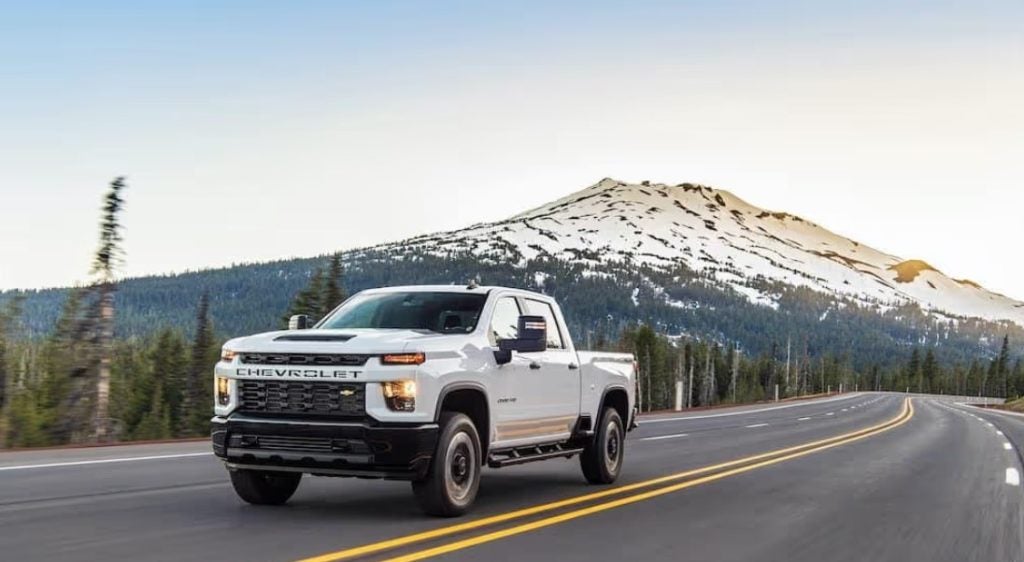
Silverado 1500 vs Silverado 2500: Which Chevy Silverado is Best?
So, you’re looking to buy one of the many Chevy trucks available on the market – that’s a good decision on your part. That said, you’re new to the Chevy truck scene and don’t know where to start. After all, there are a lot of Chevy trucks to choose from. Chevrolet has been the dominant name in pickup trucks for as long as pickup trucks have been a concept, so this should not come as a surprise. This reputation is especially prevalent in one specific model of Chevy trucks, the Chevy Silverado. The Silverado has been Chevy’s full-size model since it replaced the C/K series in 1999. However, despite its big name, there’s more to buying a Silverado than buying it on name alone. Believe it or not, there are two different types of Silverado that offer vastly different driving experiences. These are the light-duty Silverado and the more powerful Silverado HD (heavy duty). The former is a single model – the half-ton Silverado 1500, while the latter has two separate models – the three-quarter-ton Silverado 2500 and the one-ton Silverado 3500. The Silverado 3500 is designed for towing the largest loads, and if you need its impressive capabilities, then you will probably already know. However, as someone who needs a rugged truck, are you better off with a Silverado 1500 or a Silverado 2500? Both of these models have their own distinct focus, and understanding which one is right for you requires a basic knowledge of their design and features. So, What’s the Difference? When it comes down to it, each variant of the Silverado has its own set of pros and cons, and each is going to offer a very different drive. Naturally, making the correct choice is going to be the difference between buying a truck that you’re going to love driving and one that doesn’t suit your specific needs and preferences. Luckily, the differences are very clear, and with a little insight, you’ll be able to choose the best Chevy Silverado for you. To put it simply, the Chevy Silverado 1500 is a light-duty pickup truck, with a much smaller design than the heavy-duty Silverado 2500. Smaller doesn’t necessarily equate to being bad for a pickup – there are plenty of reasons to want a more compact truck after all, from agility to fuel economy. And while it may be small compared to the Silverado 2500, the Silverado 1500 is still a large and extremely capable truck. On the other hand, the Chevy Silverado 2500 is a much heavier pickup. In this case, the Silverado 2500 is better designed for the driver looking to use their vehicle more for its payload and towing capacity than speed and comfort. The Chevy Silverado 2500 offers a larger standard bed, which means that it can offer far more cargo space than the Silverado 1500. This is, of course, in addition to its standard 6.6L gas engine and optional 6.6L turbo-diesel. Altogether, this means that the Silverado 2500 can carry more cargo and drive in more difficult conditions. Because it has very capable engines and a tougher body, the Silverado 2500 boasts an incredible towing capacity of up to 18,510 lbs, while the Silverado 1500 tops out at 13,300 lbs. When it comes to payload, the heavy-duty truck again comes out on top with a maximum load of up to 3,970 lbs against 2,280 lbs for the light-duty version. While this extra capability may not matter for your needs, it is critical to keep in mind if you are buying a truck for serious work or to pull a heavy trailer. However, capability alone does not determine if a truck is right for you. What About Comfort? Of course, there is more to a pickup truck than just its ability to carry cargo and perform in difficult road conditions. When it comes to a Chevy truck, its mix of comfort and versatility is what makes for the smooth drive that it’s known for. In short, we want a drive that is not only strong and well-rounded but also comfortable in a way that many pickup trucks fail to achieve. Luckily, Chevy has made a very comfortable drive in both the Silverado 1500 and the Silverado 2500. However, the comfort experience of the Silverado is not cut equally between the two key variants. Rather, each offers something to comfort and versatility based on their difference in design. The largest difference between the Silverado 1500 and the Silverado 2500 is ride quality and handling. In order to achieve its much higher payload and tow ratings, the Silverado 2500 uses a more rugged and tougher suspension. While this makes it much more confident when being used for serious work, when you are driving a Silverado 2500 with an empty bed and no trailer, this beefed-up suspension will result in a more rigid and bouncy ride. In comparison, the Silverado 1500 provides a more car-like experience with a more comfortable and easier-handling suspension. Even apart from the suspension differences, the Silverado 1500 is a faster and more agile vehicle. Generally, smaller vehicles tend to be more mobile, handling road conditions more smoothly and providing more responsive acceleration. While this makes the Silverado 1500 perfect for those who want a faster pickup truck for highway driving or off-road adventure, this also has implications for comfort as well. In general, the Silverado 2500 is better suited for use as a work vehicle, while the Silverado 1500 is better suited for use as an everyday personal vehicle. Which Is for Me? Choosing a Silverado takes a lot of contemplation if you’re looking to buy a vehicle that will suit you. Both the Chevy Silverado 1500 and the Silverado 2500 have different features that are unique to their model. Naturally, while it is ultimately up to your own preference in a vehicle, the pickup truck that you’ll enjoy the most can be very easily seen by the type of person you are. The Silverado 2500 is a very large pickup truck, much larger than the Silverado 1500. While this does mean that it will take longer to build velocity, as well as having a generally worse fuel economy than its counterpart, it excels in towing capacity and has more overall horsepower to tackle difficult road conditions. Altogether, for those willing to pay a little more than for the Silverado 1500, the Silverado 2500 is perfect for those who need to tow heavier equipment for work. The Silverado 1500, on the other hand, is a little more modest. Although its smaller size makes towing large loads more difficult (although it is still a full-size truck that can easily tow over 6 tons), it excels in fuel economy and is generally more mobile than the Silverado 2500. In the end, the Silverado 1500 is a more suitable vehicle for the everyday driver, as it will save you money at the gas pump and give you a more comfortable ride while still being able to handle most tasks with ease. Conclusion In the end, there is a lot that goes into designing a pickup truck. Each model, the Chevy Silverado included, offers variants to optimize the driving experience for specific needs. In the Silverado’s case, it has the large Silverado 2500 for those who need more towing capacity on a daily basis. This is also in addition to the Silverado 1500, a light pickup truck designed to offer a well-rounded experience for all types of drivers. Still unsure which one is right for you? Drop by Dan Cummins Chevy Buick of Georgetown to chat with the experts and explore the best Chevy inventory in the Lexington area.